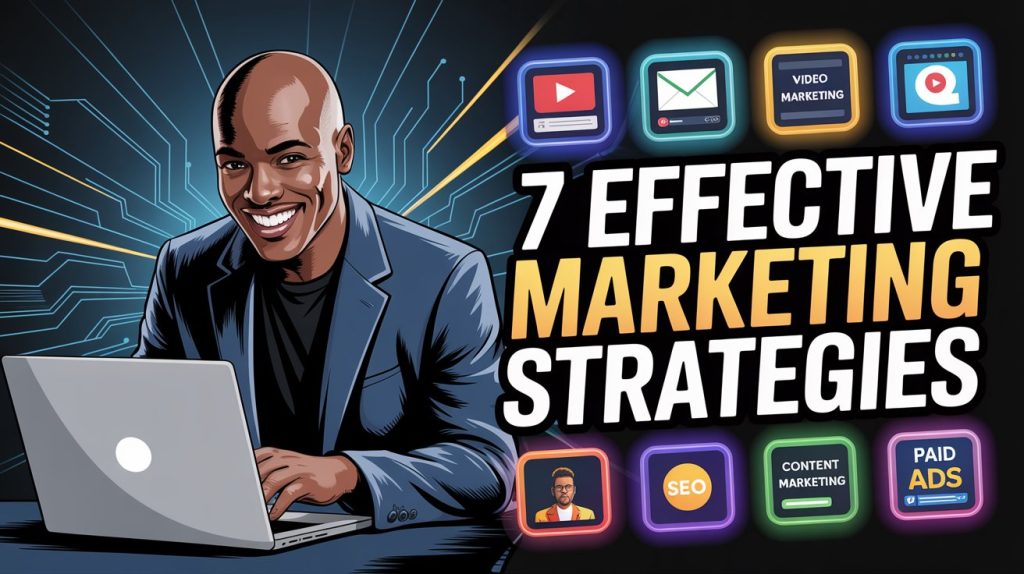
From First Client to Full Pipeline: How to Get Your First Client or Your Next Client for Your Social Media Marketing Agency

You know your services are powerful. So why is your calendar empty? Here's the cold truth that keeps most social media marketing agency owners up at night: knowing how to grow other people's businesses online doesn't automatically mean you know how to grow your own.

Social Media marketer

You can build scroll-stopping content, engineer viral hooks, and squeeze 10x ROAS out of a paid ad campaign — but when it comes time to sit across from a prospect and close them, the machine stalls. The pipeline stays thin. The “feast or famine” cycle becomes a lifestyle instead of a phase.

This article isn't theory. It's the exact, repeatable client-acquisition system used by SMMA owners who went from zero to $10,000, $20,000, and $30,000 in monthly recurring revenue — at $1,000 per month per client. By the time you finish reading, you'll have a 30-day action plan to land your first client or your next five.

Before we dive in: If you want the full blueprint for building a profitable agency from scratch (including the tools, the offer stack, and the pricing psychology), watch the “How to start a profitable AI Agency” masterclass at henrysmithmarketing.com. It's the fastest shortcut in the space right now.

1. Fix Your Offer Before You Fix Your Outreach

Most agency owners fail at client acquisition not because they're bad at sales, but because their offer is vague. “We do social media marketing” is not an offer — it's a description. Prospects don't buy services. They buy outcomes.

The highest-converting SMMA offers in 2026 look like this:

  • Specific promise: “We add $50K in pipeline to B2B SaaS companies in 90 days through LinkedIn content and outbound sequences.”
  • Specific timeline: “Within 30 days or we work until it's done.”
  • Specific niche: “Built exclusively for boutique law firms with 5–20 attorneys.”
  • Specific mechanism: “Using our proprietary Authority Content Engine™.”

Pick ONE niche. Build ONE offer. Nail ONE acquisition channel. That's how you go from generalist commodity to premium specialist — and charge $1,500 to $5,000 per month instead of $500.

2. The 4-Channel Client Acquisition Stack

Once your offer is sharp, run all four channels at once. Most new owners run one and pray. Successful owners run four and systematize.

Channel 1: Warm Outreach (Days 1–7)

Go through every single contact you have — phone, LinkedIn, email, Instagram DMs, past colleagues, friends. Send a personal message that isn't a pitch. Say: “I just launched a service helping [niche] get [outcome]. Do you know anyone in [niche] who might need help with this?”

You don't ask them to buy. You ask them to refer. This produces 20% of most new agency owners' first three clients.

Channel 2: Cold Outreach (Days 1–30, ongoing)

Pick ONE method and commit for 30 days minimum: LinkedIn DMs, cold email, or Instagram DMs. The math is simple:

  • 100 personalized messages per day
  • 5% reply rate = 5 conversations
  • 20% call conversion = 1 booked call
  • 30% close rate = 0.3 clients per call

Do that for 30 days and you'll sign approximately 9 clients. The bottleneck for 95% of agency owners isn't the market — it's sending the messages.

This is exactly where a CRM like QLM CRM becomes a weapon. QLM CRM automates the follow-up sequences, client tracking, and pipeline visibility that turn 100 cold messages into signed contracts without you drowning in spreadsheets.

Channel 3: Content Marketing (Days 7–30)

Post one short-form piece of content per day on LinkedIn, Instagram Reels, or YouTube Shorts. Not “5 tips” fluff — breakdowns of real client wins, case studies (even hypothetical ones early on), opinion pieces on your niche's biggest pain points.

The goal is not virality. The goal is that when a prospect gets your cold DM, they visit your profile and think, “This person clearly knows what they're talking about.” Content is reputation insurance.

Channel 4: Strategic Partnerships (Days 14–30)

Identify 10 people who already serve your ideal client — web designers, business coaches, fractional CFOs, accountants. Send a Loom or voice note proposing a referral partnership: “If you send me clients who need social media, I'll send clients who need your service, and I'll pay you 10% of the first 3 months of any deal you refer.”

One solid partnership will out-produce 1,000 cold DMs.

3. The Sales Call Framework That Closes at 30–50%

Booking the call is only half the battle. Most new agency owners either oversell (desperation stink) or undersell (they give away the strategy and the prospect does it themselves). The fix is a simple 20-minute diagnostic structure:

  1. Diagnose (10 min): Ask questions. Where are they now? Where do they want to be? What have they tried? What's stopping them?
  2. Prescribe (5 min): Explain the gap and how your mechanism bridges it. Do NOT give the strategy away — explain the framework.
  3. Proposal (3 min): State the price once, clearly, then stop talking.
  4. Handle objections (2 min): “I need to think about it” → “Of course. What specifically are you thinking about?” Uncover the real objection.

Practice this call with a friend 10 times before taking it live. Most first-time closers lose deals because they've never spoken the words out loud.

Ready to master this end to end? The full client acquisition playbook — including the exact scripts, the pricing psychology, and the niche-selection framework — is taught inside the “How to start a profitable AI Agency” masterclass at henrysmithmarketing.com. Agency owners in the program are routinely reporting $10,000 to $20,000 in monthly recurring revenue within 90 days.

4. The 30-Day First-Client Sprint

If you have zero clients right now, here is the exact 30-day plan:

  • Days 1–3: Define your niche, your outcome-based offer, and your pricing ($1,000–$2,000/month).
  • Days 4–7: Build a simple one-page site or Notion landing page. Set up QLM CRM to track every lead, follow-up, and pipeline stage.
  • Days 8–14: Send 100 warm outreach messages (friends, past colleagues, LinkedIn connections).
  • Days 8–30: Send 100 cold messages per day (DMs or email). Aim for 2,200 messages across the month.
  • Days 14–30: Post daily short-form content on LinkedIn.
  • Days 15–30: Reach out to 10 potential referral partners.
  • Days 20–30: Take sales calls. Close your first 1–3 clients.

If you follow this sprint, getting your first client in 30 days isn't optimism. It's arithmetic.

5. The One Mistake That Kills Every New Agency

The mistake isn't a bad offer, bad copy, or bad niche. It's quitting outreach after two weeks. The math works — but only if you do the math. Every successful agency owner I've worked with went through a “desert period” of 30 to 60 days where nothing seemed to be working, then suddenly the pipeline filled, the closes stacked, and the business hit escape velocity.

The difference between the agency owners making $20,000/month and the ones making $0 isn't talent. It's the number of messages they sent in month two.

Final Word: Stop Learning, Start Prospecting

You don't need another YouTube tutorial, another course, another certification. You need to send a message to a prospect — today. Then 100 more tomorrow. Then book a call. Then close the deal. The entire SMMA business model fits inside that loop.

The tools exist. The market exists. The money exists. The only variable is whether you do the work.

The fastest way to skip the trial-and-error phase: Watch the full “How to start a profitable AI Agency” masterclass at henrysmithmarketing.com and get the frameworks, scripts, and CRM setup that have already produced $10,000–$20,000/month for agency owners just like you.

To Your Success
Henry Smith

Why Your AI Agency Is Losing $3,000 a Month — and the One Platform That Stops the Leak

You don't have a revenue problem. You have a tool sprawl problem. Here's how QLM CRM consolidates everything into a single white-label engine that lets you scale to $20,000/month without adding a single extra subscription.

If you're running an AI agency or a social media marketing agency in 2026, you're probably paying for a landing page builder, an email marketing tool, a scheduling app, an invoicing platform, a CRM, an AI chatbot service, a contract signing tool, and maybe a project management suite. That's easily $300–$500 per month in stacked subscriptions — and that's before you add the hidden cost of switching between eight different dashboards every single day.

The agencies pulling in $10,000 to $20,000 per month aren't the ones with the biggest teams. They're the ones with the tightest systems. And the single biggest lever they've pulled is consolidating their entire tech stack into one white-label platform they can also rebrand and resell to clients.

That platform is QLM CRM — and if you haven't heard of it yet, you're about to understand why it's becoming the go-to operating system for AI agency owners and social media marketing agencies worldwide.

👉 Watch the “How to Start a Profitable AI Agency” masterclass at henrysmithmarketing.com and discover how to build your agency from zero to $20,000/month.

The Hidden Tax of Tool Sprawl on Agency Profitability

Let's do the math. A typical AI agency owner is juggling:

  • CRM (HubSpot, Pipedrive): $50–$150/month
  • Email Marketing (Mailchimp, ActiveCampaign): $50–$200/month
  • Landing Pages (Carrd, Leadpages): $20–$80/month
  • Scheduling (Calendly, Acuity): $15–$50/month
  • Invoicing (FreshBooks, Wave): $15–$50/month
  • Contract Signing (HelloSign, PandaDoc): $20–$60/month
  • Live Chat / Chatbot (Intercom, ManyChat): $50–$150/month
  • Project Management (Asana, Monday): $25–$100/month
  • Total: $245–$840/month

That's up to $10,000 a year bleeding out before you've paid yourself a single dollar. And that's just the financial cost. The real drain is context-switching — every time you jump from your CRM to your email tool to your scheduler, you lose focus, you lose time, and you lose deals that fall through the cracks between disconnected systems.

What QLM CRM Does Differently

QLM CRM was built from the ground up for agencies, coaches, and consultants. It doesn't bolt on features as afterthoughts — it integrates everything an agency needs to attract leads, close clients, deliver services, and get paid, all inside one platform you can brand as your own.

1. Total White-Label Branding

This is the game-changer. QLM CRM lets you apply your own logo, colors, and even your own custom domain. Your clients see your brand, not QLM's. You can map the entire platform to crm.youragency.com and it looks like you built it from scratch. This isn't just vanity — it's a trust signal that justifies premium pricing.

2. Unlimited Sub-Accounts

Every client gets their own workspace. You manage all of them from a single dashboard, but each client sees only their own data. This is how you scale from 5 clients to 50 without chaos.

3. Visual Sales Pipeline (Kanban Deal Tracking)

See every deal, every stage, every probability — in a drag-and-drop board. No more spreadsheet-based pipeline tracking. Move deals from “Lead” to “Proposal Sent” to “Closed Won” with a single drag.

4. Workflow Automation Builder

Build complex automations with a drag-and-drop interface. When a new lead comes in: send a welcome email, create a task, notify your team on Slack, add them to the pipeline, and schedule a follow-up — all automatically.

5. E-Signatures & AI Document Composer

Send contracts, proposals, and agreements for electronic signature directly from the CRM. The AI Document Composer can even draft contracts and proposals for you, cutting your paperwork time in half.

6. Integrated Invoicing & Payments

Generate invoices, accept payments, and track revenue — all inside the same platform where you manage your client relationships.

7. Landing Pages & Smart Forms

Build branded landing pages and lead capture forms without touching code. Perfect for running lead gen campaigns for your own agency or for your clients.

8. Smart Appointment Booking

Clients self-schedule calls with timezone sync, automatic reminders, and no-show prevention. This alone saves most agency owners 5+ hours per week in back-and-forth emails.

9. AI Chatbot Concierge

A 24/7 AI assistant that qualifies leads, answers common questions, and books appointments — even while you sleep. This is the kind of AI-powered feature that positions your agency as cutting-edge.

10. Support Portal & Ticketing

Give each client their own support portal. Track tickets, resolve issues, and maintain a complete communication history — all in one place.

👉 Want to see how all these pieces fit together into a $10K–$20K/month agency? Watch the masterclass at henrysmithmarketing.com.

The Smart Comms Upgrade: AI Voice Agents and Beyond

For agencies ready to go to the next level, QLM CRM offers a Smart Comms Upgrade (+$99/month) that adds:

  • AI Voice Sales Agents — automated phone calls that qualify leads and book appointments
  • AI Switchboard — intelligent call routing and voicemail handling
  • SMS & WhatsApp Integration — meet your leads where they are
  • Local Number Provisioning — build trust with local phone numbers

This is the kind of AI-powered communication stack that used to cost thousands per month from enterprise providers. QLM bundles it into a single add-on that any agency can deploy.

Pricing That Makes Sense for Growing Agencies

  • Pro: $59/month — Up to 10,000 contacts
  • Growth: $119/month — Up to 25,000 contacts
  • Scale: $239/month — Up to 50,000 contacts
  • Enterprise: Custom Quote — 100,000+ contacts

Compare that to the $245–$840 per month you're currently paying across separate tools — and QLM CRM gives you more, not less. Plus, everything is 30-day satisfaction guaranteed.

The Strategic Shift: From Vendor to Growth Partner

Here's the big-picture insight that separates the agencies earning $10,000–$20,000 per month from the ones stuck at $3,000: they've stopped selling tasks and started selling systems.

When you run your agency on QLM CRM, you're not just using a tool — you're building a repeatable growth engine. Every lead is tracked. Every follow-up is automated. Every client interaction is logged. Every invoice is sent on time. And because the platform is white-labeled, you can even offer it as part of your service package to clients — creating an additional revenue stream on top of your monthly retainers.

At $1,000 per month per client, you only need 10 to 20 clients to hit $10,000–$20,000 per month. QLM CRM makes it possible to manage that many clients (and more) without drowning in admin work.

👉 Ready to build your AI agency on the right foundation? Watch the “How to Start a Profitable AI Agency” masterclass at henrysmithmarketing.com.

Why This Matters Right Now

The agency landscape is shifting fast. According to industry research, agencies that adopt AI-powered systems and consolidate their tech stacks are seeing 40% higher margins and 2x client retention compared to those still cobbling together separate tools.

The agencies winning in 2026 aren't the ones with the biggest teams or the most services listed on their website. They're the ones running the tightest operations — with every lead captured, every follow-up automated, and every client interaction tracked in a single system.

QLM CRM isn't just a tool. It's the operating system for the next generation of AI agencies and social media marketing agencies that refuse to leave money on the table.

Your Next Step

If you're serious about building an AI agency or social media marketing agency that generates $10,000 to $20,000 per month, the first move isn't hiring more people or adding more services. It's consolidating your systems into one powerful, white-labeled platform that grows with you.

Explore QLM CRM today at qlmcrm.qlmbusinesssolutions.com and start running your agency like a $20,000/month business — even if you're just starting out.

👉 And don't forget — watch the “How to Start a Profitable AI Agency” masterclass at henrysmithmarketing.com for the complete blueprint to building, scaling, and profiting from your AI agency in 2026.


To Your Success
Henry Smith

Scale Beyond $20,000: The 2026 Blueprint for Taking Your AI Agency from Startup to Machine

Most AI Agencies Fail at $10K — Here's Exactly Why, and the 5-Step Scaling System That Gets You to $50K Per Month Without Adding Chaos

You started your AI agency with a laptop and a vision. Six months later, you have five clients paying $1,000 a month, you're working 60-hour weeks, and you just realized something terrifying: you are the bottleneck.

Every new client feels like a gift and a curse at the same time. More revenue, yes — but also more onboarding calls, more deliverables, more late-night troubleshooting, more “quick questions” on weekends. You're richer on paper. But you're further from the freedom you started this business to build.

If this sounds familiar, you're not alone. The majority of new AI agencies never make it past $10,000 to $15,000 per month. Not because there isn't demand. Not because the skills aren't there. But because the business was never designed to scale.

The good news? In 2026, the tools, frameworks, and playbooks exist to break through the scaling ceiling — and the people who learn these systems first are building agencies that generate $30,000, $50,000, and even $100,000 per month while working fewer hours than when they were stuck at $10K.

Henry Smith walks through this exact scaling blueprint in the “How to Start a Profitable AI Agency” masterclass at henrysmithmarketing.com.


The Scaling Trap: Why Most AI Agencies Stall at $10K-$15K

Here's the pattern. You launch. You land 3 to 5 clients through hustle. You deliver great results personally. Revenue grows. Then:

You become the delivery engine. Every client expects the same quality of work you produced in Month 1. But your time is finite. Five clients require 20 hours per week. Ten clients require 40. You're trading time for money at a “better rate,” but you're still a freelancer with a nicer title.

Your systems are tribal knowledge. Your processes live in your head. A SOP exists only if you've bothered to write it down. When you take a day off, everything stops. That's not a business — that's a high-paying job with good benefits.

Client mix is inconsistent. You're serving the restaurant next door, the SaaS founder in Singapore, and the fitness influencer in Los Angeles. Every client type requires different deliverables. Efficiency is impossible when every project is a custom puzzle.

Pricing hasn't caught up to value. Those first three clients are paying $500 per month because you needed their logos for social proof. Now you're embarrassed to raise prices on them, so you take on more low-paying clients to hit revenue targets — making the delivery problem worse.

This is exactly the transition the masterclass at henrysmithmarketing.com is designed to help you navigate.


The 5-Step AI Agency Scaling System

Here's the framework that's working for agency owners in 2026. Each step builds on the one before it, and skipping one typically results in hitting the exact ceiling you're trying to escape.

Step 1: Niche Down to Scale Up

The counterintuitive truth: the fastest path to scaling your AI agency is to serve fewer types of customers.

When you niche down — choose coaches, real estate agents, e-commerce brands, or AI Video Clone services for one specific industry — three things happen:

  • Service delivery becomes repeatable. Every client in the same niche needs similar deliverables. That means you can build templates, scripts, and workflows that work across your entire client base. Delivery time per client drops by 40 to 60 percent.
  • Marketing becomes easier. “We help dental practices get 50 new patients per month” is a far more compelling headline than “We do AI marketing for businesses.” Prospects self-select. Inbound leads increase.
  • Referrals compound. When three dental practices in one city get results, the fourth hears about it from the first three. Your referral pipeline builds itself.

Agencies that niche properly typically reach $10,000 per month twice as fast as generalists — and they scale past $30K without proportional complexity.

Step 2: Productize Your Service

Most AI agencies sell custom projects. Scalable agencies sell packages.

The difference matters enormously:

  • Custom projects require unique proposals, unique timelines, unique deliverables. Every client negotiation starts from zero.
  • Productized packages are predefined, priced, and deliverable on a standard timeline. “AI Video Clone Setup Package: $2,500, 14-day delivery.” The client either buys it or doesn't. No custom scoping.

In 2026, the most scalable AI agencies offer three tiers of service — typically a done-for-you package, a hybrid package, and a strategy-only tier. Clients self-select based on budget and needs. The agency operator focuses on delivering the same high-quality output across every engagement.

Through the masterclass at henrysmithmarketing.com, Henry Smith shows you exactly how to structure your service tiers for maximum margin and minimum delivery chaos.

Step 3: Systemize Everything

The scaling ceiling for most AI agencies is the point where the owner's calendar fills up. The way past that ceiling is to remove the owner from as many processes as possible.

Here's what that looks like in practice:

  • Onboarding SOP. New client signs → automated welcome email → intake form → 30-minute strategy call → deliverable timeline set. The owner runs the strategy call, but everything before and after happens automatically.
  • Content production SOP. Client brief → AI-generated first draft → team member review → client approval → scheduled for publishing. The owner doesn't write any content personally after the first 2-3 clients.
  • Check-in process. Monthly performance review generated automatically from dashboards → summary sent to client → 15-minute check-in call. No more 2-hour monthly review meetings.

When your systems are documented, a virtual assistant or part-time team member can follow them. The agency stops being dependent on any single person's presence.

Step 4: Build a Team That Scales With You

At the $10,000 to $15,000 per month level, you need help. But the first hire is the most important strategic decision you'll make.

The wrong first hire: A full-time employee on a fixed salary. You take on payroll pressure you may not be able to sustain if clients churn.

The right first hire: A virtual assistant or contractor who handles your lowest-value, highest-time tasks — scheduling, basic client communication, data entry, report formatting. Cost: $5 to $15 per hour. Hours needed: 10 to 20 per week. Freed-up time for you: 15 to 30 hours per week.

The second hire: A delivery specialist — someone who can execute your core service (AI Video Clone creation, social media content, lead generation) under your strategy direction. This is the person who lets you move from “doer” to “director.”

With two solid hires, a single agency owner can typically manage 20 to 30 clients — reaching $20,000 to $50,000 per month while working 25-35 hours per week.


Revenue Milestones: The Realistic Path to $50K Per Month

Here's what the scaling timeline looks like for agency owners who follow this system:

$5,000-$10,000/month (Months 1-6): Founder-led delivery. 5-10 clients. Focus on nailing the service and building initial case studies. Revenue validates the model.

$10,000-$20,000/month (Months 6-12): First hire (VA or contractor). Begin systemizing. Niche solidifies. Client acquisition becomes more predictable. This is where most agencies stall — but not if you keep pushing.

$20,000-$35,000/month (Year 2): Second hire (delivery specialist). Package pricing standardized. Referral engine active. Outbound marketing produces 3-5 qualified leads per month consistently. Owner works on strategy and high-level client relationships only.

$35,000-$50,000/month (Year 2-3): Third hire or part-time operations manager. Multiple income streams (core service, upsells, potentially a course or community). Team runs daily operations. Owner focuses on growth initiatives and key client relationships.

The $10,000 to $20,000 per month plateau is not a skills problem — it's a systems and structure problem. Fix the systems, and the revenue ceiling lifts.


The AI Tools That Make Scaling Possible

In 2026, a well-configured AI stack lets a small team do what a 20-person agency did in 2020:

  • GoHighLevel / AgencyElite — All-in-one CRM, funnel builder, automation platform. One tool replaces five separate subscriptions for client management.
  • HeyGen / Synthesia — AI Video Clone creation at scale. Once the pipeline is set up, producing video content for a new client takes hours, not weeks.
  • ChatGPT / Claude — Content drafting, client communication frameworks, proposal generation. Cut the time for any writing task by 60-80 percent.
  • Zapier / Make — Connect every tool in your stack so data flows automatically between platforms. Client signs → system updates → onboarding email triggered → project created in your delivery tool.
  • Loom / Descript — Asynchronous client communication that eliminates unnecessary meetings. Record a 5-minute Loom instead of scheduling a 30-minute call.
  • Metricool / Buffer — Social media scheduling and analytics across all platforms from one dashboard. Manage 15 clients from one interface.

Henry Smith's masterclass at henrysmithmarketing.com includes a complete recommended tech stack with setup guides for each tool — exactly what to use and when as your agency grows.


Your Next Move

If you're reading this and you already run an AI agency that's stuck at $10,000 to $15,000 per month: the problem isn't your market, your pricing, or your talent. It's the systems you haven't built yet.

If you're reading this and you haven't started yet: the best time to build an AI agency was two years ago. The second-best time is today — with the knowledge of all the scaling pitfalls you can avoid from day one.

Either way, the next step is the same: learn the complete system before you try to wing it.

Watch the free “How to Start a Profitable AI Agency” masterclass at henrysmithmarketing.com. Inside, you'll get the niche selection framework, the $1,000 per client pricing model, the client acquisition playbook, and the scaling system that takes you from your first client to $20,000+ per month — all laid out in order.

Your $10,000, $20,000, even $50,000 per month AI agency is possible. The only variable is whether you're ready to take the next step.

Image credit: AI-robotics-innovations from Pixabay

To Your Success
Henry Smith

Digital Marketing 101 (A Beginner’s Guide To Marketing)

This blog post is a comprehensive guide to modern digital marketing, designed to help you move past the noise and focus on what actually drives revenue. We will explore the foundational strategies used by high-level brands to achieve consistent growth.

Digital Marketing 101


The Modern Guide to Digital Marketing: How to Stop Guessing and Start Growing

Hello! I’m Henry, and I am thrilled you’ve found your way to this guide. If you’ve ever felt like the world of digital marketing is a confusing maze of buzzwords and ever-changing algorithms, you aren’t alone. My goal today is to help you cut through that clutter. We are going to look at the marketing strategies that are producing real-world results right now, and I’m going to show you that marketing doesn't have to be a headache.

The truth is, digital marketing has been made to seem far more complex than it actually is. That’s a real shame, because once you understand the core principles, the whole process becomes remarkably simple. At its heart, digital marketing isn't just about flashy ads or endless emails; it is the journey of how people find you, learn to trust you, and eventually choose to do business with you.

In this guide, I’m drawing from over a decade of experience building campaigns for major 7 and 8-figure brands. I’ve realized that while there are thousands of “hacks” out there, there are only a few essential things you truly need to master. If you’re ready to skip the guesswork and start seeing actual progress, let’s dive in.

Digital vs. Traditional: Why the Internet Wins

To understand where we are going, we first have to understand where we’ve been. People often ask me how digital marketing stacks up against “traditional” methods—things like TV, radio, newspapers, and billboards.

Traditional marketing isn't dead; it still has its place for specific goals. However, digital marketing is simply marketing done with electronic tools (SEO, social media, websites, and email), and it offers four massive advantages that traditional media just can’t match:

  1. Massive Reach: With a laptop or a smartphone, your potential audience is essentially everyone on the planet. You aren't limited by your local town or a specific radio station's broadcast range.

  2. Unmatched Precision: This is a big one. In traditional marketing, you pay to reach “everyone” in hopes that a few interested people see your ad. In digital marketing, we can hand-pick our ideal audience based on their interests and behaviors.

  3. Lower Costs: You don’t need a Super Bowl budget to succeed online. Digital platforms allow you to start small and grow, ensuring you aren't wasting money on people who aren't your ideal customers.

  4. Incredible Speed: Traditional campaigns take months to plan, print, and distribute. Online, you can launch a campaign in minutes. This allows for immediate feedback. If something isn't working, you can change it instantly.

Because everything happens online, you also get a “digital trail.” You can see exactly how many people clicked, how much it cost you, and how many people bought. That level of transparency is a marketer's dream.

Strategy vs. Tactics: The Secret to Long-Term Success

One of the biggest reasons business owners feel like they are spinning their wheels is that they confuse strategy with tactics.

Think of it this way: Strategy is choosing the right battlefield to fight on. Tactics are the specific moves you use to win the fight. If you pick the wrong battlefield, it doesn't matter how good your moves are—you’ve already lost.

Strategy is your overarching plan. Tactics are the small actions, like what hashtags you use or how many times a week you post on Instagram. To see real results, you must lock in your strategy first. I call this the Marketing Master Plan, and it consists of five vital parts.

Part 1: The Model

Your model is your business setup. What are you selling? What is the price? How do you deliver it? For a business to succeed long-term, the model must be profitable and, importantly, fun to run. Don't build a business that you’ll eventually grow to resent. You also must ensure that the market actually wants what you are selling. A little bit of research here saves months of heartache later.

Part 2: The Market

Who are your people? I’m begging you: don't say “everyone.” If you market to everyone, you market to no one. You need to create an “ideal customer avatar.” This includes their demographics (age, gender, income), their geographics (where they live), and most importantly, their psychographics (their values, attitudes, and beliefs). You should be able to describe your customer’s problems better than they can describe them themselves.

Part 3: The Message

Once you know who your people are, you have to speak their language. Don't just talk about yourself; talk about their struggles. When a customer feels like you truly understand them, they stop being a “browser” and start becoming a “believer.” Customers don't buy when they understand your business; they buy when they feel understood by your business.

Part 4: The Media

Only after you know your model, market, and message do you choose your platforms. Whether it’s YouTube, Instagram, or Email, the “media” only works if the first three parts are solid. Many people start here, which is why they get “shiny object syndrome” and waste money on platforms where their customers aren't even hanging out.

Part 5: The Machine

The “Machine” is your marketing funnel. This is the automated system that turns a stranger into a subscriber, and a subscriber into a lifelong customer. It usually involves traffic (from an ad or post), an opt-in page (to collect an email), and a follow-up sequence that builds a relationship until they are ready to buy. A good machine makes your business repeatable, predictable, and scalable.

Organic vs. Paid Marketing: Time or Money?

Now that we have a strategy, how do we get people to see it? This brings us to the debate of Organic versus Paid marketing.

  • Organic Marketing is anything you post without paying for promotion—blog posts, YouTube videos, or social media updates. It’s “free” in terms of dollars, but it costs significant time and energy. It’s great for building trust, but it’s often slow.

  • Paid Marketing is when you spend money on ads (Facebook, Google, or YouTube) to get your content in front of people immediately. It’s fast and scalable, but it requires an investment.

The best approach? Start with organic to prove that your message works. Once you have a “winner,” use paid marketing to pour gasoline on the fire and scale up your results.

Direct Response vs. Brand Awareness

Another area where people get tripped up is the difference between Direct Response and Brand Awareness.

  • Direct Response is when you ask for a clear, immediate action: “Buy this,” “Sign up here,” or “Download this guide.” It is fast, trackable, and focused on your Return on Investment (ROI).

  • Brand Awareness is the “long game.” It’s about building a reputation and staying top-of-mind so that people remember you months from now.

The biggest mistake I see is when people run a brand awareness campaign but expect direct response results. That is a recipe for disappointment. For about 90% of businesses, I recommend focusing almost exclusively on Direct Response. Let the brand awareness happen as a natural side effect of people seeing your great offers.

Search vs. Discovery: Understanding Intent

To win at digital marketing, you must understand why a person is on a platform in the first place. We call this Intent.

  • Search Marketing (Google/YouTube): People have a mission. They are searching for an answer or a solution. Your job is to be the answer they find through SEO or search ads.

  • Discovery Marketing (Instagram/TikTok/Facebook): People are just killing time. They aren't looking for you. Your job here is to “stop the scroll.” You have to be interesting enough to earn their attention.

If you try to use “search” tactics on a “discovery” platform, you will fail. You have to match your approach to the user’s intent.

Marketing Products vs. Marketing Services

If you are a service professional—like a coach, consultant, or agency owner—you need to understand that you cannot market like someone selling a physical product.

Products are tangible; you can see them and touch them. Services are invisible. You are selling a transformation. Don't sell the “coaching sessions”; sell the version of the client that exists after the sessions are over. Shine a light on the pain they are in now, and then paint a clear, irresistible picture of the results they can achieve with your help. Products show features; services sell outcomes and feelings.

B2B vs. B2C: Speaking to the Right Brain

Finally, are you selling to a business (B2B) or a consumer (B2C)?

  • B2B (Business-to-Business): These are usually bigger deals with longer sales cycles. Buyers want to feel smart and safe. They respond to logic, ROI, and clear processes.

  • B2C (Business-to-Consumer): These are often faster decisions based on emotion and identity. They want to feel excited or seen. They respond to lifestyle and desire.

Even in B2C, however, you must remain selective. Never try to target “anyone with a pulse.” Use your Master Plan to find your specific niche.

Your Next Steps

I know we’ve covered a lot of ground today. If you are sitting there thinking, “This is great, but how do I actually start?” I’ve got something for you.

I am currently giving away my entire digital marketing system 100% free. You can watch my Free Masterclass where I pull back the curtain on the exact strategies and software I teach to marketing agency owners to grow their businesses.

If you just want to find the best tools and templates to build your own campaigns and automations, I have those ready for you as well. These are the exact systems I’ve used to generate millions in revenue for everyone from solo creators to massive corporations.

Stop guessing and start building a system that brings in leads and sales on autopilot. Whether you are a coach, consultant, or agency owner, the Free Masterclass is designed specifically to help you attract your ideal clients.

Check out the Free Masterclass here and let's start growing your business together. I’ll see you in there!

To Your Success
Henry Smith

The Social Media Marketing Agency Playbook: How to Build a $20,000 Per Month Business in 2026

Why Starting a Social Media Marketing Agency Right Now Is the Smartest Move You Can Make — And Exactly How to Do It

While most people are debating whether AI will replace marketing agencies, a new wave of entrepreneurs is quietly building social media marketing businesses that earn $10,000 to $20,000 per month using the very same AI tools everyone else is afraid of. They're not competing with AI — they're leveraging it to deliver results that solo freelancers and bloated old-school agencies simply cannot match.

The barrier to entry has never been lower. The opportunity has never been higher. And the playbook for getting started has never been clearer.

If this sounds like the business you've been waiting for, you can learn the complete system in Henry Smith's “How to Start a Profitable AI Agency” masterclass at henrysmithmarketing.com.


Why Social Media Marketing Agencies Are Thriving in 2026

Let's start with the numbers that matter.

Global social media advertising spend is projected to exceed $310 billion in 2026. Every business — from local plumbers to international software companies — needs an active presence on at least three to five platforms. Yet 67 percent of small businesses report they do not have the time, skills, or consistency to manage their own social media effectively.

That gap is your opportunity.

The pandemic accelerated digital transformation by five years. Remote work made digital-first communication permanent. Short-form video exploded on TikTok, Instagram Reels, and YouTube Shorts. Businesses that survived the shift now understand they need professional help — and they're willing to pay $500 to $2,500 per month for it.


The Modern Social Media Marketing Agency Model

Forget everything you think you know about agencies. The 2026 model looks nothing like the Madison Avenue stereotype. Here's what a profitable modern social media marketing agency actually looks like:

Lean team. One to three people, not twenty. You don't need a large staff — you need the right tools and the right systems.

AI-powered delivery. Content creation, scheduling, analytics, and even initial client strategy can now be handled or dramatically accelerated by AI tools. This means one person can manage 10 to 15 clients — something that was impossible five years ago.

Recurring revenue. You charge monthly retainers, not project fees. Ten clients at $1,000 per month equals $10,000. Twenty clients at the same rate hits $20,000.

Niche focus. The most profitable agencies specialize. You might serve only dental practices, or only fitness coaches, or only e-commerce brands in a specific price range. Specialization lets you systemize your delivery and charge premium rates.

Remote-first. Everything happens online. You can run this business from your kitchen table or from a beach in Bali. No office, no commute, no overhead beyond your tools and internet connection.

Want the exact step-by-step system? The “How to Start a Profitable AI Agency” masterclass at henrysmithmarketing.com covers niche selection, service packaging, client acquisition, and AI tool setup in detail.


The Essential AI Tools for a 2026 Social Media Agency

The single biggest advantage a new agency has today over one starting even two years ago is the AI toolkit available. Here are the essential categories and the platforms leading each one:

Content Creation

ChatGPT / Claude. Caption writing, hashtag research, content calendar generation, and audience analysis. Most agency owners use these daily to produce client content in a fraction of the time.

Canva AI. Design templates, brand kit management, and AI-assisted graphic creation. Canva's Magic Studio can generate on-brand social media graphics in seconds.

Opus Clip / Pictory. Instantly repurpose long-form content (podcasts, webinars, client videos) into short-form clips optimized for TikTok, Reels, and Shorts.

Scheduling and Management

Metricool / Buffer / Later. Multi-platform scheduling with built-in analytics. Agencies typically manage all client accounts from one dashboard.

Publer. A strong alternative for agencies wanting white-label reporting and bulk scheduling across many accounts.

Lead Generation

GoHighLevel. The all-in-one platform many agency owners use for CRM, lead capture, automated follow-up, and pipeline management.

Apollo.io. For outbound prospecting — finding and contacting potential clients at scale.

Analytics and Reporting

Sprout Social / Hootsuite. Enterprise-grade social media analytics with client-facing report generation.

Databox. Custom dashboards that aggregate data from multiple platforms into one easy-to-read client report.

Through the masterclass at henrysmithmarketing.com, you get direct recommendations on which tools to use at each stage of your agency's growth, plus access to agency-ready templates and swipe files.


How to Land Your First 5 Clients (Without Cold Calling)

Here's the framework that's working for new agency owners right now:

The Free Audit Strategy. Pick 10 businesses in your target niche. Analyze their social media presence. Create a short Loom video showing three specific things they can improve. Email it to them. Close rate: roughly 30 percent.

The LinkedIn Magnet. Optimize your LinkedIn profile to attract your ideal client. Post daily about social media mistakes in their industry. When they inquire, offer a discovery call. Close rate from discovery call: roughly 25 percent.

The Referral Engine. After delivering 60 days of great results for your first clients, simply ask for referrals. Offer a $200 to $500 referral bonus for every introduction that converts. This compounds quickly.

The Portfolio Play. Can't land clients without results? Create three mock social media campaigns for imaginary businesses in your niche. Post them on your website and LinkedIn. Prospects can't tell the difference between a mock portfolio and a real one when assessing your capability.

Need help getting started? Watch the “How to Start a Profitable AI Agency” masterclass at henrysmithmarketing.com — it includes the exact client acquisition scripts, email templates, and LinkedIn strategies that work right now.


The Economics: How to Reach $20,000 Per Month

Let's break down the path to $20,000 per month in realistic terms:

Month 1-3: Foundation. Set up your agency, choose your niche, learn your tools, land your first 2 to 3 clients at $500 to $750 per month (introductory pricing). Revenue: $1,500 to $2,250.

Month 4-6: Momentum. Raise prices to $1,000 per month. Grow to 5 to 8 clients through referrals and your growing reputation. Revenue: $5,000 to $8,000.

Month 7-12: Scale. Systemize your delivery with templates, SOPs, and AI tools. Reach 10 to 15 clients at $1,000 to $1,500 per month. Revenue: $10,000 to $22,500.

Year 2+: Expansion. Hire a part-time assistant, raise prices to $2,000 plus per client, and add service tiers. Revenue: $20,000 to $50,000 per month.

The key insight: you don't need hundreds of clients. You need 10 to 20 good ones. At $1,000 per month per client, that's your $10,000 to $20,000 target — achievable within six to twelve months following the right system.


The Biggest Mistakes New Agency Owners Make

Avoid these and you'll outpace 90 percent of competitors:

Spreading too thin across niches. Pick one. Go deep. Specialization builds reputation faster than being a generalist.

Underpricing. $300 per month clients are the most demanding. $1,000 to $2,000 per month clients are typically easier to serve and more loyal.

Ignoring AI tools. If you're manually creating every graphic and caption, you're already behind. Your competitors using AI are delivering more content in less time.

Not tracking ROI for clients. Social media marketing only justifies its cost when clients can see the return. Build reporting into your service from Day 1.


Your Next Step

The social media marketing agency opportunity in 2026 is real, proven, and more accessible than ever. The tools exist. The demand exists. The training exists.

What's missing is you taking action.

Henry Smith's “How to Start a Profitable AI Agency” masterclass at henrysmithmarketing.com gives you the complete blueprint — from choosing your niche to closing your first client to scaling past $10,000 per month. Thousands of agency owners are already applying these strategies successfully.

The only question is whether you'll join them or watch from the sidelines.

Image credit: digital-marketing-team from Pixabay

To Your Success
Henry Smith


AI Video Clones: The $1,000/Client Service That’s Making New Agency Owners $20,000 Per Month

The most in-demand AI service in 2026 isn't chatbots. It isn't email automation. It's something that lets business owners clone themselves on video once and then deploy that digital version to sell, educate, and engage customers 24 hours a day — without recording another video, hiring a videographer, or showing up on camera ever again.


AI Video C.lone
AI Video Clones have quietly become the flagship service that new AI marketing agencies are charging $1,000 to $3,000 per month for. And with just 10 to 20 clients, agency owners are generating between $10,000 and $20,000 per month in recurring revenue.

If you've been looking for a reason to start your own AI agency, this is it.

What Exactly Is an AI Video Clone?

An AI Video Clone is a hyper-realistic digital replica of a business owner created from a short video recording — sometimes as little as two to five minutes of footage. Once the clone is built, it can:

  • Deliver sales pitches, product walkthroughs, and onboarding messages in the owner's exact voice and mannerisms
  • Create personalized video responses to leads and customers in any language
  • Appear in social media content, email campaigns, and website pages — all generated on demand
  • Present webinars, training modules, and client updates without the owner needing to be on set

Unlike basic avatar tools from 2023, today's AI Video Clones capture micro-expressions, speech patterns, gestures, and emotional tone. The result is a digital twin so convincing that prospects often cannot tell they are watching a clone rather than a live recording.

Why Business Owners Are Desperate for This Service

The math is brutal for most business owners. They know video marketing works. Studies show video content generates 1200 percent more shares than text and image content combined. But most owners hate being on camera, struggle with consistency, and lose hours each week scripting, filming, and editing content that may or may not perform.

An AI Video Clone solves all of those problems at once:

Time freedom. The owner records once. The clone works forever. A real estate agent can deliver personalized property tour introductions to every lead at 2 AM. A fitness coach can generate daily motivation clips across five platforms without lifting a finger.

Scale without burnout. Instead of choosing between serving existing clients or creating new content, business owners do both simultaneously. The clone handles the content engine while the real person handles high-touch client work.

Consistency. Algorithms reward creators who post daily. Most business owners cannot maintain that pace. An AI Video Clone can produce 30, 60, or even 90 pieces of video content per month with zero additional effort.

Multilingual reach. Leading AI clone platforms can translate the owner's video into over 30 languages while preserving their voice and expressions. A local business owner in Manchester can suddenly appear to speak French, Arabic, or Mandarin to international prospects.

The Numbers: Why This Is a $10,000 to $20,000 Per Month Opportunity

Here's why AI Video Clones are the perfect anchor service for a new AI agency:

  • High perceived value. Business owners understand the cost of their own time. When you show them they can replace 10 hours of weekly video work with a clone they pay $1,000 a month for, the decision is obvious.
  • Recurring revenue model. Clones need ongoing management — new scripts, updated content calendars, performance optimization. That creates natural monthly retainers.
  • Low delivery cost. After the initial setup, generating clone content takes minutes and costs pennies in platform fees. Your margins on a $1,000 per month client routinely exceed 80 percent.
  • Scalable client load. Because delivery is largely automated, a single agency operator can comfortably manage 15 to 25 clients — translating directly to $15,000 to $25,000 in monthly recurring revenue.

With the tools and training available through Henry Smith's masterclass at henrysmithmarketing.com, new agency owners learn exactly how to set up this service, price it correctly, and land their first clients within weeks — not months.

Ready to build your own AI agency around services like this? Watch the “How to Start a Profitable AI Agency” masterclass video at henrysmithmarketing.com and learn the exact blueprint for building a $10,000 to $20,000 per month agency.

The Best AI Video Clone Platforms in 2026

If you're starting an AI agency and want to offer Video Clone services, here are the platforms leading the market right now:

HeyGen. The current category leader for realistic video clones. Business owners upload a short reference video and receive a fully operational clone capable of generating unlimited video content. HeyGen's API allows agencies to automate delivery at scale.

Synthesia. A strong choice for corporate and training content. Synthesia's enterprise features let agencies white-label the service and deliver branded clone experiences to clients.

D-ID. Specializes in real-time interactive AI clones — perfect for businesses that want their digital twin to respond to website visitors in live video conversations.

ElevenLabs (Video). Originally a voice company, ElevenLabs now offers synchronized video generation that pairs cloned voices with matching facial animations.

Colossyan. Popular with agencies serving the education and coaching space, offering multilingual video clone generation with built-in subtitle and layout customization.

Through Henry Smith's masterclass, you get direct guidance on which platforms to use for each client niche, how to negotiate agency pricing, and how to package the service for maximum profitability.

How to Land Your First AI Video Clone Clients

The best part about selling AI Video Clones is that the service sells itself. Business owners need to see it to believe it — and once they see their own face speaking in a video they never recorded, they are sold.

Here's the three-step client acquisition framework taught in the masterclass:

Step 1: Create a demo. Use a free trial on HeyGen or Synthesia to create a clone of yourself. Record a 30-second pitch video using the clone and post it on LinkedIn. The post will generate inbound enquiries from other business owners who want the same thing.

Step 2: Offer a free pilot. Approach three local business owners — a real estate agent, a dentist, a fitness coach — and offer to create a free 60-second clone video for them. When they see the result, they almost always want the full package.

Step 3: Package and price. Bundle the clone creation, monthly content generation, and performance reporting into a $1,000 to $2,500 per month retainer. With 10 clients at $1,000 each, you have hit your $10,000 per month target.

Don't know where to start? The “How to Start a Profitable AI Agency” masterclass at henrysmithmarketing.com walks you through the entire process — from choosing your niche to closing your first AI Video Clone client.

Who Should Start an AI Video Clone Agency?

You don't need a technical background. You don't need a marketing degree. The people succeeding most with this model in 2026 are:

  • Former corporate professionals tired of trading time for money who want a scalable business
  • Freelancers and consultants looking to productize their expertise into a recurring-revenue agency
  • Stay-at-home parents building a location-independent business that fits around family life
  • Career changers who see AI as the opportunity of a generation and want to get in early

What you do need is the right training, the right tools, and the willingness to take action. That's exactly what Henry Smith provides in his masterclass.

The Bottom Line

AI Video Clones are not a future opportunity — they are a present one. Every day that passes, more business owners discover what they can do. The agencies being built today around this service are establishing themselves as the go-to providers in their markets.

The question isn't whether AI Video Clones will transform how businesses create content. They already have. The question is whether you'll be the agency offering the service or the business owner watching competitors use it to pull ahead.

Watch the free masterclass at henrysmithmarketing.com today. Learn exactly how to build a profitable AI agency offering AI Video Clones and other high-demand AI services. Your $10,000 to $20,000 per month business is waiting.


Google Just Killed Review Gating — Here’s What Smart Businesses Do Next

Finger feedback review write note good values points rating stars

Image: “Finger, Feedback, Report Back” by geralt from Pixabay (Pixabay Content License – free for commercial use, no attribution required).

If your reputation-management playbook still includes review gating – asking happy customers to review you publicly while quietly filtering unhappy ones – you should stop reading this and turn it off right now.

Yes, right now.

The FTC has already taken enforcement action. Google is quietly suspending business profiles suspected of it. And the businesses that win in 2026 are not hiding their bad reviews – they are using AI to respond to them faster than any human ever could.

This article will walk you through exactly what changed, why non-gating reputation strategies are now the more profitable approach, and how launching an AI-powered reputation agency with Henry Smith of henrysmithmarketing.com can become your path to making $10,000 to $20,000 per month in recurring revenue.

Watch the free masterclass: “How to Start a Profitable AI Agency” at henrysmithmarketing.com before you finish this article.

What Is Review Gating (And Why Did It Work for So Long)?

Review gating was the quiet trick at the heart of modern reputation management.

The setup was simple:

  1. A customer finishes a purchase or a service.
  2. Before they leave, they are sent a quick survey.
  3. If they rated 4+ stars, they get redirected to Google, Yelp, or Facebook to post a public review.
  4. If they rated 1-3 stars, they are sent a private feedback form that never hits a public platform.

On paper, it looked like clever customer-service automation. In reality, it was review manipulation – and Google, the FTC, and the Consumer Financial Protection Bureau all agree on that now.

Why Review Gating Is Officially Dead in 2026

It did not die overnight. It died under three simultaneous pressures.

1. Google's Review Policy Update

Google's updated review policies explicitly call out gating as a conflict of interest. A business profile caught filtering reviews is now subject to total removal of all reviews, business listing suspension, and permanent ineligibility from Google Ads for reputation-service advertisers.

2. FTC Enforcement and Fake-Review Fines

The FTC issued a proposed rule in 2023 that made fake or misleading review practices finable at $50,120 per violation. That rule is actively being enforced. Several US businesses in the home services, dental, and automotive space have already been fined six figures.

3. Consumer Skepticism

ReviewMeta and Fakespot data show that consumers now expect a business with a 4.7+ average but only 8 reviews to be gaming the system. A real 4.1 with 300 reviews, including a few critical ones, converts far better in 2026.

Gating does not just get you penalized – it makes your profile look suspicious.

What Non-Gating Reputation Management Looks Like

Delete the funnel. Keep the intelligence.

The ethical replacement for review gating is what top operators are calling Reputation Intelligence – an always-on system that listens, responds, and converts feedback into revenue without ever manipulating a single review.

Here are the five pillars.

1. Universal Review Solicitation (Send It to Everyone)

Every customer, automatically, receives a review request within 24-48 hours of service completion. No screening. No star-rating filter. Sent through SMS, email, and WhatsApp using templated, personalisable flows.

This is the opposite of gating – it is volume-based credibility.

2. Real-Time Review Monitoring and Response

AI listening tools track every platform – Google, Yelp, Facebook, Trustpilot, industry-specific sites – the moment a review is published. Within minutes, the business owner gets an AI-drafted reply tuned to sentiment, severity, and brand voice.

Negative reviews become customer-recovery moments. Positive reviews become content fuel for social.

3. Sentiment Analysis Across Channels

Instead of a single star rating, operators now pull structured sentiment data. What are customers saying about wait times? Pricing? Staff friendliness? Cleanliness? This data replaces the “filter unhappy customers” mindset with a genuinely useful business-intelligence layer.

4. Public Response Frameworks

The best reputation agencies in 2026 train business owners on public reply templates that acknowledge the complaint without being defensive, move the conversation into DMs or a phone call, and show prospective customers that the business takes feedback seriously.

Every public reply is marketing. Every review is a landing page.

5. Proactive Reputation Amplification

Instead of hiding bad reviews, top agencies turn happy customers into a referral flywheel. Automated case studies, video testimonials (with consent), and Google Posts push positive signals without ever touching the bad ones.

Why This Is a $10K-$20K/Month AI Agency Opportunity

Every local business in America is sitting on a broken reputation funnel.

Dentists. Roofers. Auto shops. Spas. Restaurants. Med spas. Law firms. They all need the system above – and almost none of them have the time, the tools, or the AI to run it themselves.

That is exactly why Henry Smith built the “How to Start a Profitable AI Agency” masterclass. It is the single best entry point if you want to launch a reputation-management (or full-service AI marketing) agency in 2026.

Here is what you get access to when you plug into Henry's ecosystem:

  • Done-for-you AI reputation tools – monitoring, response automation, sentiment dashboards
  • Lead generation playbooks for signing local service businesses at $1,500-$5,000/month retainers
  • Templates, scripts, and closing frameworks used by agencies already doing $20k+/month
  • Ongoing training and community so you are never building alone
  • The latest marketing tools for generating leads and offering AI services to businesses that are already desperate for this

One agency student in Ohio, for example, went from zero to $17,500/month in recurring revenue in under five months using these exact reputation-intelligence playbooks.

Watch the free masterclass now at henrysmithmarketing.com – it is the fastest way to see whether this model is right for you.

The 5 Services You Will Offer as an AI Reputation Agency

Once you have watched the masterclass, here is the product menu you can offer immediately:

  1. Review Response Setup – AI drafting of replies across all platforms. $500-$1,500/month setup + retainer.
  2. Universal Review Solicitation System – automated, compliant review requests. $750-$2,000/month.
  3. Reputation Monitoring Dashboard – white-labeled reporting for the business owner. $500-$1,500/month.
  4. Negative Review Recovery – structured public reply frameworks + private outreach. Project-based, $2,000-$5,000.
  5. Full Reputation Intelligence Retainer – all of the above plus quarterly strategy calls. $3,000-$5,000/month.

Stack 5 to 8 clients and you are comfortably in the $10k-$20k/month range – with margins above 80%.

The One Mistake New Operators Make in Year One

They try to build the tools themselves.

They spend three months writing scraping scripts, cobbling together Zapier automations, and building a “review dashboard” that does not do half of what an off-the-shelf AI stack already does.

Henry Smith's masterclass short-circuits that whole trap. You get access to the proven stack already used by working agencies – so you can launch in weeks, not quarters, and spend your time signing clients instead of debugging APIs.

What to Do Right Now

Review gating is over. The businesses and agencies still clinging to it are one FTC audit or one Google policy strike away from disaster.

The agencies winning in 2026 are the ones running Reputation Intelligence – ethical, AI-powered, always-on – and charging premium retainers for it.

You can watch the full breakdown in Henry Smith's free masterclass, grab the training stack, and start building your agency around this exact model.

-> Watch the “How to Start a Profitable AI Agency” masterclass now: henrysmithmarketing.com

To your Success
Henry Smith

The AI Marketing Revolution: Launch Your Profitable Agency in 2026

How Henry Smith and henrysmithmarketing.com Are Helping Entrepreneurs Build Six-Figure AI Marketing Businesses

The biggest wealth transfer in a generation is happening right now — and most people are completely missing it.

While traditional marketing agencies struggle with rising costs and shrinking margins, a new breed of entrepreneurs is building AI-powered marketing agencies that generate $10,000 to $20,000 per month with lean teams and minimal overhead. The barrier to entry? Almost nothing. The knowledge gap? That's where most people fail.

Henry Smith, founder of henrysmithmarketing.com, has been in the trenches building AI marketing systems for businesses across every industry. Now he's opening the playbook to anyone ready to capitalize on the AI marketing gold rush — and the timing has never been better.

Why AI Marketing Agencies Are Exploding in 2026

The AI marketing landscape has shifted dramatically. What was once cutting-edge technology is now table stakes. According to recent industry data, 73% of businesses are actively seeking AI-powered marketing solutions, yet fewer than 15% of marketing agencies actually deliver them.

This gap represents a massive opportunity.

Businesses don't just want traditional marketing anymore. They want:

  • AI-driven lead generation that converts at 3-5x industry averages
  • Automated customer journeys that run 24/7 without human intervention
  • Predictive analytics that identify high-value prospects before competitors even see them
  • Content creation at scale without sacrificing quality or brand voice
  • Real-time campaign optimization that adapts to market changes instantly

The entrepreneurs who position themselves as AI marketing specialists right now will own this market for the next decade.

The $10,000 to $20,000 Monthly Blueprint

Let's break down the economics of a profitable AI marketing agency.

Service Model Examples:

AI-Powered Lead Generation System: $2,500-$5,000 monthly retainer

  • AI chatbot integration
  • Automated lead scoring and qualification
  • Predictive prospect identification
  • Real-time campaign optimization

Full-Stack AI Marketing Management: $5,000-$10,000 monthly

  • Everything above plus
  • AI content creation and distribution
  • Automated email sequences with personalization
  • Social media management with AI insights

Enterprise AI Marketing Operations: $15,000-$25,000 monthly

  • Custom AI model training
  • Multi-channel automation
  • Advanced analytics and reporting
  • Dedicated AI strategy consultant

With just 4-6 monthly clients at the $2,500-$5,000 tier, you're looking at $10,000-$30,000 monthly revenue. The overhead? Minimal. AI tools handle the heavy lifting, allowing you to manage multiple clients without burning out.

What Services Should Your AI Marketing Agency Offer?

The most profitable AI marketing agencies in 2026 focus on high-impact, recurring-value services:

1. AI-Powered Lead Generation

Machine learning algorithms that identify, qualify, and nurture leads automatically. Your clients get a steady stream of qualified prospects without the traditional sales team overhead.

2. Conversational AI and Chatbots

Custom-trained AI assistants that handle customer inquiries, book appointments, and qualify leads 24/7. Businesses save thousands on customer service while increasing conversion rates.

3. Predictive Analytics and Customer Insights

AI systems that analyze customer behavior, predict buying patterns, and identify upsell opportunities. This data transforms how businesses make decisions.

4. Automated Content Creation and Distribution

AI-powered content engines that produce blog posts, social media content, email campaigns, and more — all optimized for engagement and conversion.

5. Marketing Automation and Workflow Optimization

Custom automation systems that eliminate repetitive tasks, reduce human error, and free up your clients to focus on what they do best.

The Support System That Changes Everything

Building an AI marketing agency sounds great in theory, but execution is where most entrepreneurs hit a wall. That's exactly why Henry Smith created the “How to Start a Profitable AI Marketing Agency” masterclass at henrysmithmarketing.com.

This isn't another generic business course. This is a comprehensive system built by someone who's actually done it — someone who understands the tools, the clients, the pricing, and the scaling challenges because he's lived them.

What you get access to:

Latest AI Marketing Tools

The exact platforms and software Henry uses to deliver AI marketing services. No more guessing which tools actually work or wasting money on overhyped solutions that don't deliver.

Proven Client Acquisition Strategies

How to land your first paying clients and scale to $10,000+ monthly. Henry shares the outreach templates, proposal frameworks, and closing techniques that have worked in the real world.

AI Service Delivery Frameworks

Step-by-step systems for setting up AI marketing campaigns that deliver results. From initial setup to ongoing optimization, you'll know exactly what to do at each stage.

Pricing and Positioning Strategies

How to price your services for maximum profitability while positioning yourself as the premium choice in your market. No more competing on price — you'll compete on value.

Ongoing Support and Updates

The AI landscape changes fast. Henry's masterclass includes regular updates as new tools and strategies emerge, so you're never left behind.

Why Now Is the Perfect Time

The AI marketing space is at an inflection point. Here's why timing matters:

Business awareness is high. Companies know they need AI, but they don't know how to implement it. They're actively looking for specialists who can guide them.

Tool accessibility has never been better. The AI tools that would have cost millions to develop five years ago are now available through affordable subscriptions. Your barrier to entry is just knowledge and execution.

The competition is still small. Most marketing agencies are still playing catch-up. Early movers in the AI space are establishing themselves as authorities and capturing market share.

Client budgets are expanding. Businesses are reallocating their marketing budgets toward AI-powered solutions. The money is flowing in — you just need to be the one catching it.

The Real Cost of Waiting

Every month you wait to start your AI marketing agency is a month of revenue you'll never recover.

Consider this: if you started today and landed just two clients in your first month at $3,000 each, that's $6,000 you wouldn't have otherwise. By month six, with six clients averaging $4,000 monthly, you're at $24,000 per month. Over a year, that's nearly $300,000 in revenue.

Meanwhile, the businesses that needed your services went to someone else. The market position you could have built went to a competitor. The knowledge you could have gained is now someone else's advantage.

The AI marketing revolution isn't coming — it's here. The question isn't whether this opportunity is real. The question is whether you'll be the one building the agency or watching from the sidelines as others do.

Your Next Step

Henry Smith has made it his mission to help entrepreneurs like you break into the AI marketing space and build profitable agencies that actually scale. The masterclass at henrysmithmarketing.com is your shortcut to avoiding the mistakes, the wasted time, and the trial-and-error that kills most new agencies.

Watch the “How to Start a Profitable AI Marketing Agency” masterclass video now at henrysmithmarketing.com.

In this comprehensive training, you'll discover:

  • The exact steps to launch your agency in the next 30 days
  • Which AI tools deliver real results (and which are just hype)
  • How to land your first $5,000+ client in your first month
  • The service packages that clients are actively buying right now
  • How to scale to $20,000+ monthly without burning out

The AI marketing gold rush won't last forever. The window for early movers is open now, but it's closing every single day.

Visit henrysmithmarketing.com today and watch the masterclass that's already helped dozens of entrepreneurs build six-figure AI marketing agencies.

Your future clients are out there right now, looking for exactly what you can offer. The only question is whether you'll be ready when they come calling.

The time to act is now. Henry Smith is waiting to show you how.

To your Success
Henry Smith